
Avoid Structural Issues and Achieve a Stable, Professional Floating Staircase Finish
A DIY floating staircase can transform your home—but when not installed correctly, one of the most common problems is movement or “bounce” in the treads. A properly built cantilever staircase should feel solid underfoot, so any flex is a sign that something isn’t right. Understanding the cause is key to fixing it and achieving a true modern staircase design.
Why Do Floating Stairs Bounce?
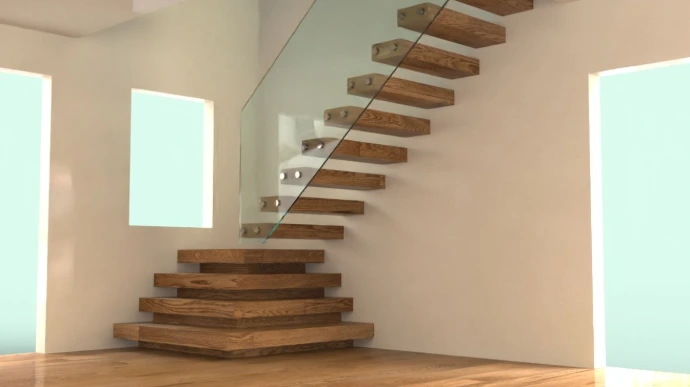
The main reason a floating staircase feels unstable is insufficient structural support. Unlike traditional stairs, cantilevered designs rely on hidden strength—typically within a wall or steel structure.
Common causes include:
- Weak or non-load-bearing wall fixings
- Incorrect or insufficient steel reinforcement
- Poor installation or inaccurate measurements
- Low-quality materials or undersized components
Without proper engineering, even a visually clean custom staircase can underperform.
The Importance of Proper Structure
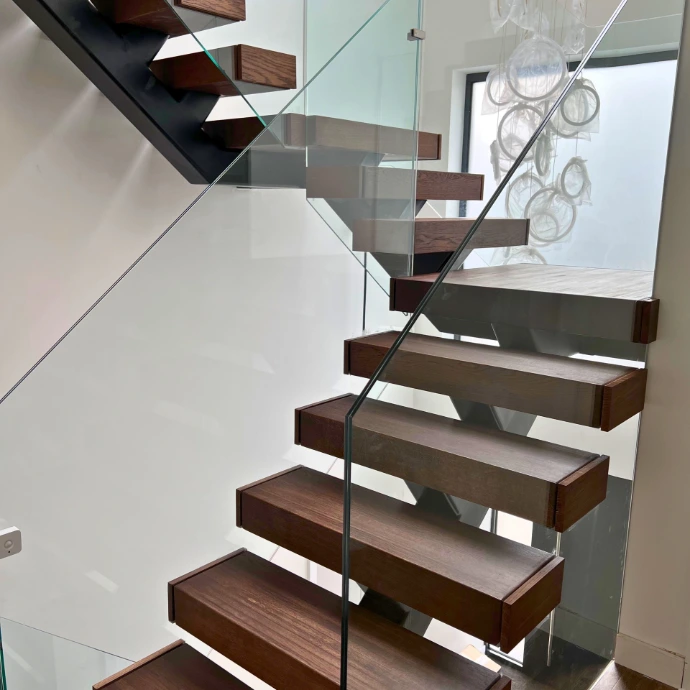
A true cantilever staircase design requires precise load calculations and secure anchoring. Each tread must be fixed into a structural system that distributes weight evenly and prevents deflection over time.
At Celn, every bespoke staircase is designed with stability in mind—ensuring that the final result not only looks like a floating stair but performs like a fully engineered structure.
How to Fix Bouncing Stair Treads
If your DIY staircase has movement, there are a few ways to resolve it:
-
Reinforce the Structure
Add or upgrade internal steel supports or brackets to increase rigidity. -
Check Wall Integrity
Ensure the staircase is fixed into a proper load-bearing wall or structural frame. -
Upgrade Materials
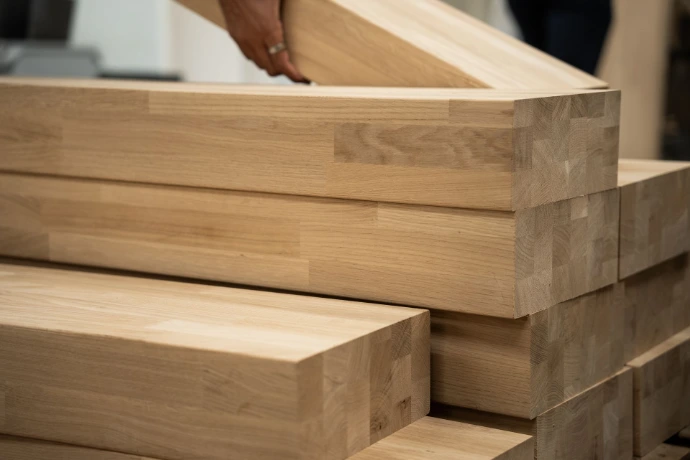
Thicker solid oak treads and stronger metal components can reduce flex. -
Correct Installation Issues
Re-align or re-secure fixings to eliminate movement and improve stability.
In many cases, the solution involves improving what’s hidden behind the design rather than changing the visible elements.
How to Avoid These Issues from the Start
The best way to prevent problems is to start with a properly designed system. Using a DIY staircase kit from Celn ensures that all components are engineered to work together, with accurate dimensions and structural guidance provided.
This allows you to achieve a floating staircase design that looks minimal but feels completely solid.
Final Thought
A floating staircase should feel just as strong as it looks. When the engineering, materials, and installation are done right, there’s no movement—only clean lines, stability, and a truly premium finish.
Avoid common DIY staircase mistakes with guidance from Celn’s expert team. For advice, pricing, or project support, email sales@celn.com or call +1 213 8570 108 / +1 213 840-9935