
Understanding the Two Styles
When selecting a modern staircase design, one of the key decisions is whether a mono-stringer staircase or a double stringer staircase is the better fit for your home. Both designs offer a clean, contemporary appearance, but each creates a different visual impact and overall feel within the space.
What Is a Mono-Stringer Staircase?
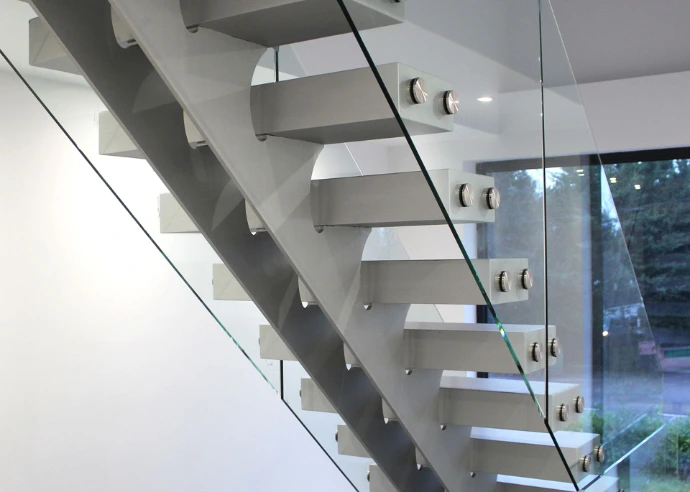
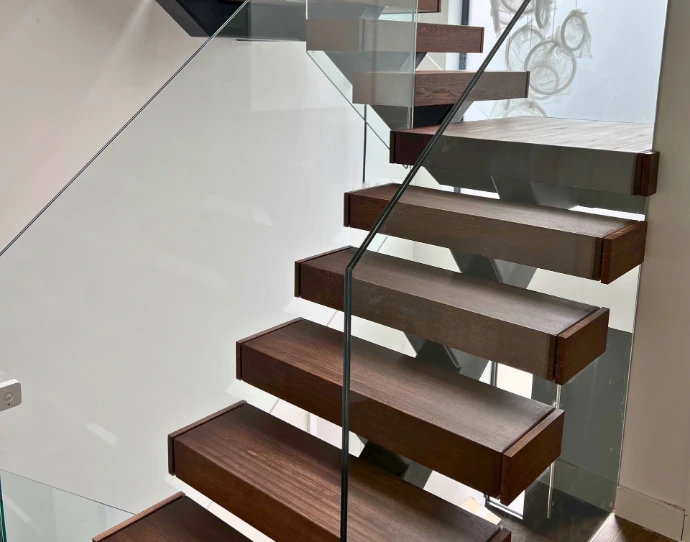
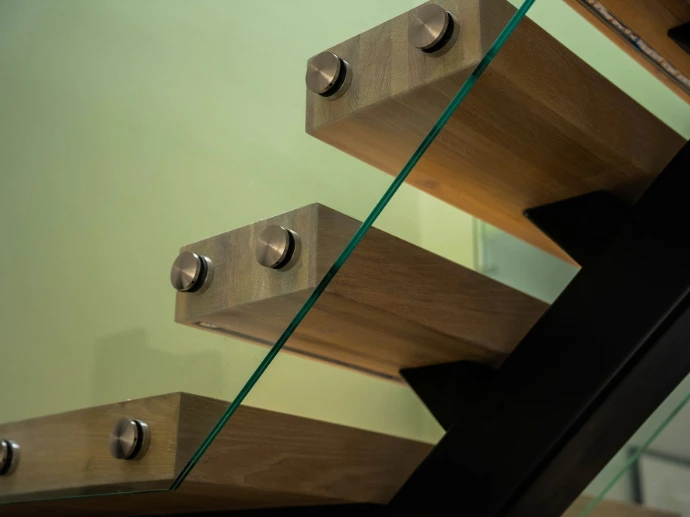
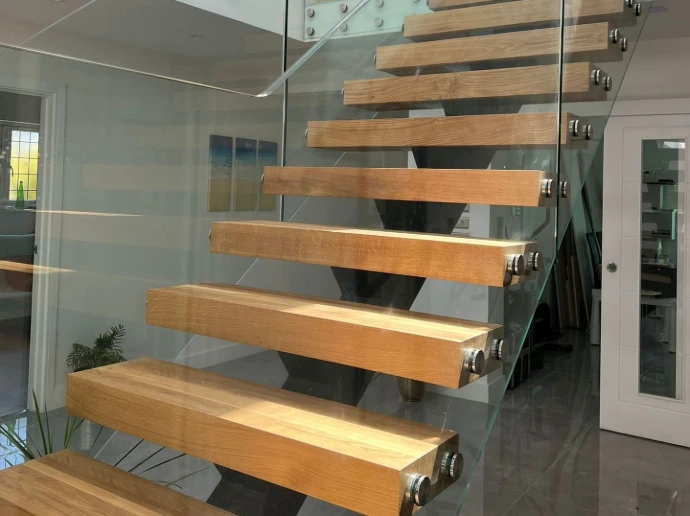
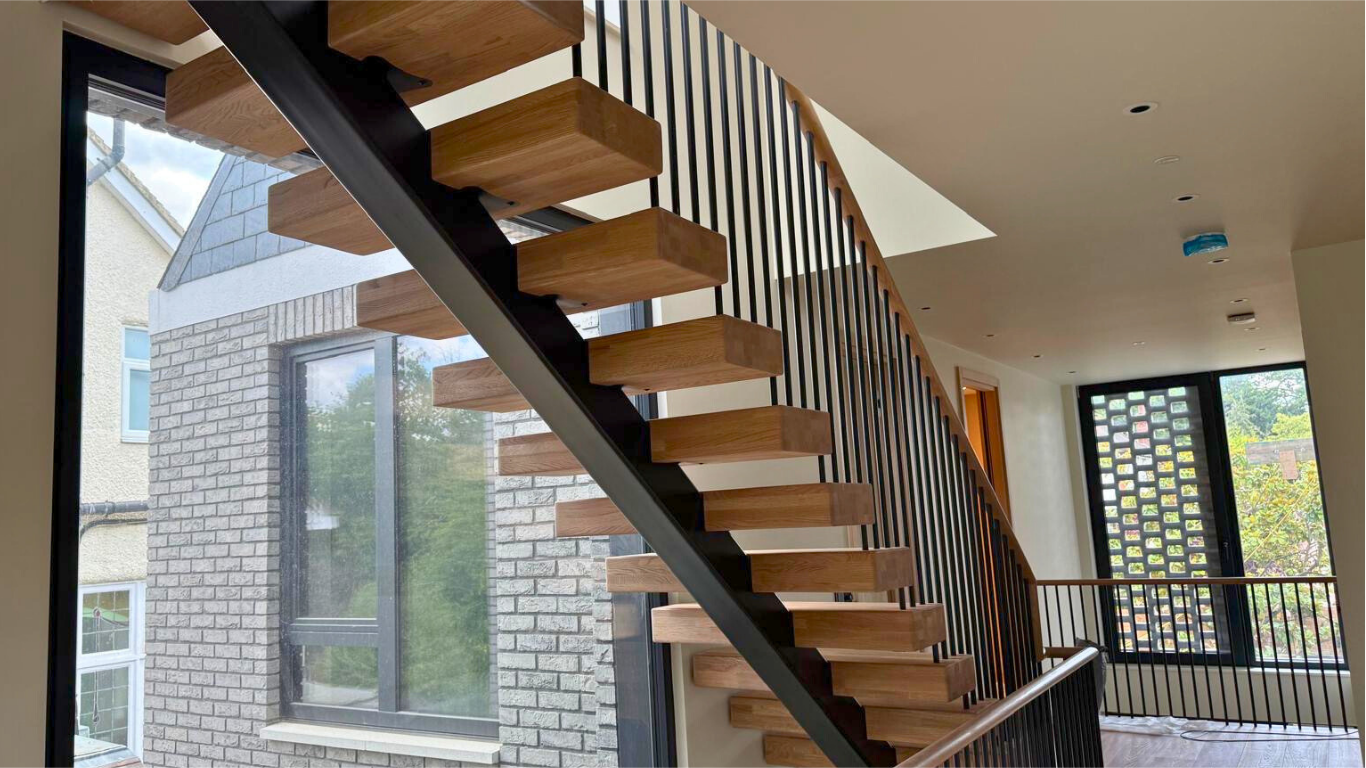
A mono-stringer staircase, also known as a central spine staircase, is supported by a single structural beam beneath the treads. This creates a lighter, more open appearance and makes it an ideal option for homeowners who want to achieve a floating staircase effect. It works especially well in open-plan interiors where light, flow and a sense of space are key design priorities.
What Is a Double Stringer Staircase?
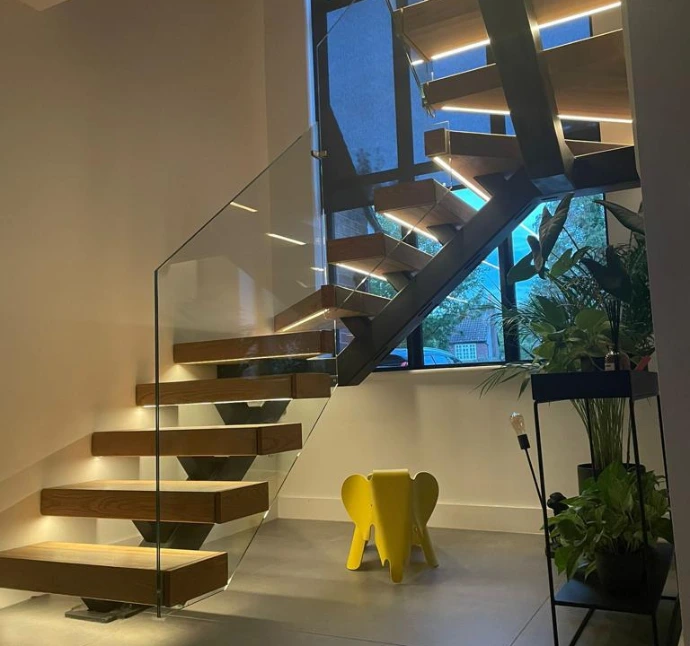
A double stringer staircase uses two structural supports, one on each side of the treads. This gives the staircase a stronger and more grounded presence while still maintaining a modern look. It is often a great choice for wider staircases or for interiors that suit a more substantial architectural feature.
Bespoke Finishes for a Tailored Design
At Celn, both staircase styles can be finished with solid oak treads, precision-engineered metalwork and glass balustrades to create a fully bespoke staircase tailored to your home. These material combinations allow each design to feel refined, high-end and aligned with the overall interior style.
Which Staircase Design Is Right for Your Home?
If you are looking for a lighter, more minimal look, a mono-stringer staircase is often the ideal choice. If you prefer a staircase with a more structured and solid presence, a double stringer staircase may be the better option. Both designs can deliver a high-end custom staircase that adds style, function and lasting value to the home.
Compare mono-stringer and double stringer staircases with expert guidance from Celn to find the right structural solution for your project. For advice, pricing, or support, email sales@celn.com or call +1 213 8570 108 / +1 213 840-9935.